Posts

Showing posts with the label chronic pain

IT'S NO BIG DEAL

Image
I have some of the same things this woman does. And because I have been diagnosed as physically disabled 18 years (NOT MY "CHOICE"!!! either) some people comment on how well I "adapted" and "cope" because I'm giving them the impression "it's no big deal"... Well IT IS A BIG DEAL... it cut my living a decent productive life off at the knees... in my 30s !!! From the great site: BUT YOU DON'T LOOK SICK! __________________ Lately I’ve been getting the impression from some of my friends that maybe my growing list of chronic illnesses is no big deal. No one is actually coming out and saying these words, but that is definitely the feeling I’m getting. This point could be debatable. Maybe they think that. Maybe I’m projecting. But this is how they are making me feel, so right now this is my reality. And it’s fine really. I know that no matter how much education I do or how much awareness I try to bring, I am neve...
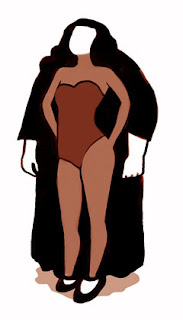
Fat & Disability: What Few of You Want to Hear

Image
by Renee Martin The personal narrative is something I have avoided, because the naked honesty also leaves one extremely vulnerable to attack. Living in a marginalized body is difficult enough without showing one’s war wounds, but when it becomes clear that hiding is only enabling the complete erasure of people who look and function like me, then it is time to speak out . You see, I am fat, Black, female and differently-abled. I can never completely be at home with any one of the labels that best describe me. In the media, I can see Black women, or even fat black women, but fat and differently abled are definitely categories that are understood to be mutually exclusive. A body like mine contradicts the mainstream social discourse. Fat activist groups like NAAFA (The National Association to Advance Fat Acceptance) have worked hard to promote HAES (Health at any size). NAAFA’s goal is to build “a society in which people of every size are accepted with dignity and equality in all a...

SEPTEMBER IS PCOS AWARENESS MONTH

Image
I have suffered with this disease for 49 years. If you have questions, write me.

Explaining Your Chronic Illness to Others

Image
How to Help Others Relate to Your Chronic Illness by Ellinorianne One of the biggest challenges for those of us struggling with Chronic Illness is that we may not "look" sick and those around us may not get how we are forced to make compromise with our lives at every turn. For me, it has had a lot to do with work and trying to communicate to my coworkers how my Fibromyalgia affects my ability to deal with everyday tasks. The last few weeks have been rather difficult, just Tuesday I spent a good twenty minutes staring between my computer and my work trying to figure exactly what it was I needed to do. My brain fog was just kicking in, I hadn't been getting enough sleep and I was not fully functional. I probably LOOKED fine but I was not okay and had to leave early. I was almost in tears because I was so frustrated, tired and hurting. Symptoms of Fibro-fog The severity of Fibro-fog fluctuates from day to day, as well as from person to person. The following is ...

Some of us Can 'Feel Your Pain'

Image
For years I would say to people, "I can't sit/ be near you. You're giving me a headache." They'd get mad - then later I'd find out they had some horrible illness. They'd make me think I was crazy... but I'm not! If you've ever thought that you literally feel other people's pain, you may be right. A brain-imaging study suggests that some people have true physical reactions to others' injuries. Using an imaging technique called functional MRI, UK researchers found evidence that people who say they feel vicarious pain do, in fact, have heightened activity in pain-sensing brain regions upon witnessing another person being hurt. The findings, published in the journal Pain, could have implications for understanding, and possibly treating, cases of unexplained "functional" pain. "Patients with functional pain experience pain in the absence of an obvious disease or injury to explain their pain," explained Dr. Stuart W. G. Derb...

Let's Hope Effective Treatment is Just Around the Corner!

Image
By DENISE GRADY Many people with chronic fatigue syndrome are infected with a little known virus that may cause or at least contribute to their illness, researchers are reporting. The syndrome, which causes prolonged and severe fatigue, body aches and other symptoms, has long been a mystery ailment, and patients have sometimes been suspected of malingering or having psychiatric problems rather than genuine physical ones. Worldwide, 17 million people have the syndrome, including at least one million Americans. An article published online Thursday in the journal Science reports that 68 of 101 patients with the syndrome, or 67 percent, were infected with an infectious virus, xenotropic murine leukemia virus-related virus, or XMRV. By contrast, only 3.7 percent of 218 healthy people were infected. Continuing work after the paper was published has found the virus in nearly 98 percent of about 300 patients with the syndrome, said Dr. Judy A. Mikovits, the lead author of the paper. XMRV is a ...

Chronic Pain Speeds Up the Aging Process

Image
Younger people with pain look similar in terms of their disability to people who are two to three decades older without pain, according to a study published in this month's issue of the Journal of the American Geriatric Society. The results of the study uncovered that people with pain develop the functional limitations classically associated with aging at much earlier ages. Functional limitations that impair the ability to live independently increase markedly with age, and to examine the effect researchers looked at the data from the 18,531 participants, aged 50 and older, who took part in the 2004 Health and Retirement Study. The four physical abilities considered were: mobility, for example walking or jogging; stair climbing; upper extremity tasks, and; activity of daily living (bathing, dressing, eating, etc) with or without help. 24% of participants had significant pain (often troubled by pain that was moderate or severe most of the time) and across all four physical abilities ...

No Cast? No Cane? No Pain!

Image
Hey! They Don’t LOOK Disabled! Who Is Allowed To Park In those Disabled Parking Spaces, Anyway? Have you ever seen someone get out of a car parked in a space reserved for the disabled, who did not LOOK disabled? Did it make you very uncomfortable or even upset? Did you let them know of your disapproval by giving them a dirty look or yelling something at them? Well, you are not alone. Many people are very disturbed by the sight of a seemingly mobile person stealing the space of someone who is truly in need of it. After all, we want to protect the rights of people for whom these spaces are reserved! However, in wanting to help those who deserve these parking spaces, we actually may be hurting someone who does have a legal right and a legitimate need to park there. H ow can this be true, you ask? Isn’t it obvious who is and who is not disabled? The answer is… NO. The qualifications for the general accessible parking spaces include those using chairs, walkers, crutches and canes, as well a...

30 Things About My Invisible Illness You May Not Know

Image
1. The illness I live with is: Atypical M.S., Fibromyalgia, Neurally Mediated Hypotension, Chronic Fatigue Immune Dysfunction Syndrome, PTSD, Adrenal Fatigue, PCOS, Neuropathy 2. I was diagnosed with it in the year: 1995 (PCOS I was diagnosed in 1966) 3. But I had symptoms since: 1994 4. The biggest adjustment I’ve had to make is: Not working and not being around people every day 5. Most people assume: I'm just fat and lazy 6. The hardest part about mornings are: severe migraines and chronic pain. Just walking can be excruciating 7. My favorite medical TV show is: You Are What You Eat 8. A gadget I couldn’t live without is: Cellphone 9. The hardest part about nights are: Falling Asleep and Staying Asleep 10. Each day I take 11 pills & vitamins. (No comments, please) 11. Regarding alternative treatments I: t ried them all - some worked some didn't 12. If I had to choose between an invisible illness or visible I would choose: invisible 13. Regarding working and career: mi...

Things People Say... to the Invisibly Disabled

Image
People say a lot of things to and about folks with invisible chronic illnesses. I think most of the folks on my flist have heard it all before, aimed at them or people they know and love. Some of it's cruel. Some of it is unthinking. Some of it is well-meant but painful. A lot of these things fall into general categories. Have you tried...? This one is almost always well-meant but it doesn't do much for me. Usually it's folks who have only recently met me who use this one. It doesn't seem to occur to them that, having lived with my various conditions most of my life, chances are I've tried it unless it's something that's just come out of the newest research. Drugs, alternative therapies, magical and spiritual work, physical therapy, acupuncture; I've tried pretty much everything. I've done years of research online and talked to dozens of doctors over the years. Some things have helped. Some have been useless. Some have caused problems for various rea...

Chronic Pain Makes 50 Year Olds Feel 80

Image
Well, DUH! by livescience.com People who suffer chronic pain tend to have general physical capabilities similar to those decades older, a new study finds. Scientists re-examined data from a 2004 study of 18,531 people age 50 and over. As one example, among participants age 50 to 59 who had no chronic pain, 37 percent could jog a mile and 91 percent could walk several blocks with no trouble. Among those with chronic pain, only 9 percent could jog the mile and only half managed the walking task. "We found that the abilities of those aged 50 to 59 with pain were far more comparable to subjects aged 80 to 89 without pain, of whom 4 percent were able to jog 1 mile and 55 percent were able to walk several blocks, making pain sufferers appear 20 to 30 years older than non-pain sufferers," said study leader Kenneth Covinsky of the Division of Geriatrics at the University of California, San Francisco. Chronic pain is a huge problem for middle-aged and older adults. In fact 24 percent ...

Can Those with an Invisible Illness Park in the Blue Spots Without Others Seeing Red?

Image
“Do you know the fine for using someone else’s handicapped parking permit is $300?” “That parking spot is saved for the disabled! You should be ashamed of yourself!” Nearly everyone with an invisible illness has been told, “You don’t look disabled to me!” One of my friends replied, “Well, you don’t look stupid to me.” I just bite my lip to try to prevent the tears from forming, broken-hearted that I appear to be deceptive, when I would do anything to give back this parking perk that I use on a rare occasion. As I circle the parking lot a fourth time on this day I hope for a spot to open up within two-hundred yards of the store, but there is nothing remotely close at this bustling superstore where I need to buy my prescriptions and milk for my toddler. My rheumatoid arthritis is flaring badly, causing extra fluid in my knees to dislocate pieces of loose bones. Every step is painful and unpredictable. Finally I sigh in resignation and pull into the farthest “blue parking spot.” I reach ...

Invisible No More

Image
Dr. Devin J. Starlanyl Remarks Invisible Illnesses Conference Washington, DC (May 11, 2002) Thanks for all the other wonderful people who have taken so much time and effort to bring about this event. Look around you. Most of us here, those with chronic invisible illnesses, share more with each other than we do with our blood relatives. About 10 years ago, I created a word, FMily, to express the bond that we share. It’s not just people with fibromyalgia and chronic myofascial pain that share this bond. We all have in common invisible illness, and many of us have more than one. We are a FAMILY, as close as any troops who have been through war together and survived. Welcome, everyone, to the first National Family Reunion. Immobility is difficult for us. It’s okay to move around, stretch, or whatever you need to be as comfortable as possible. I do understand. I’ll teach you a few tricks to help. Contract the muscles on one side of your buttocks, and then relax them, and then do the same w...